
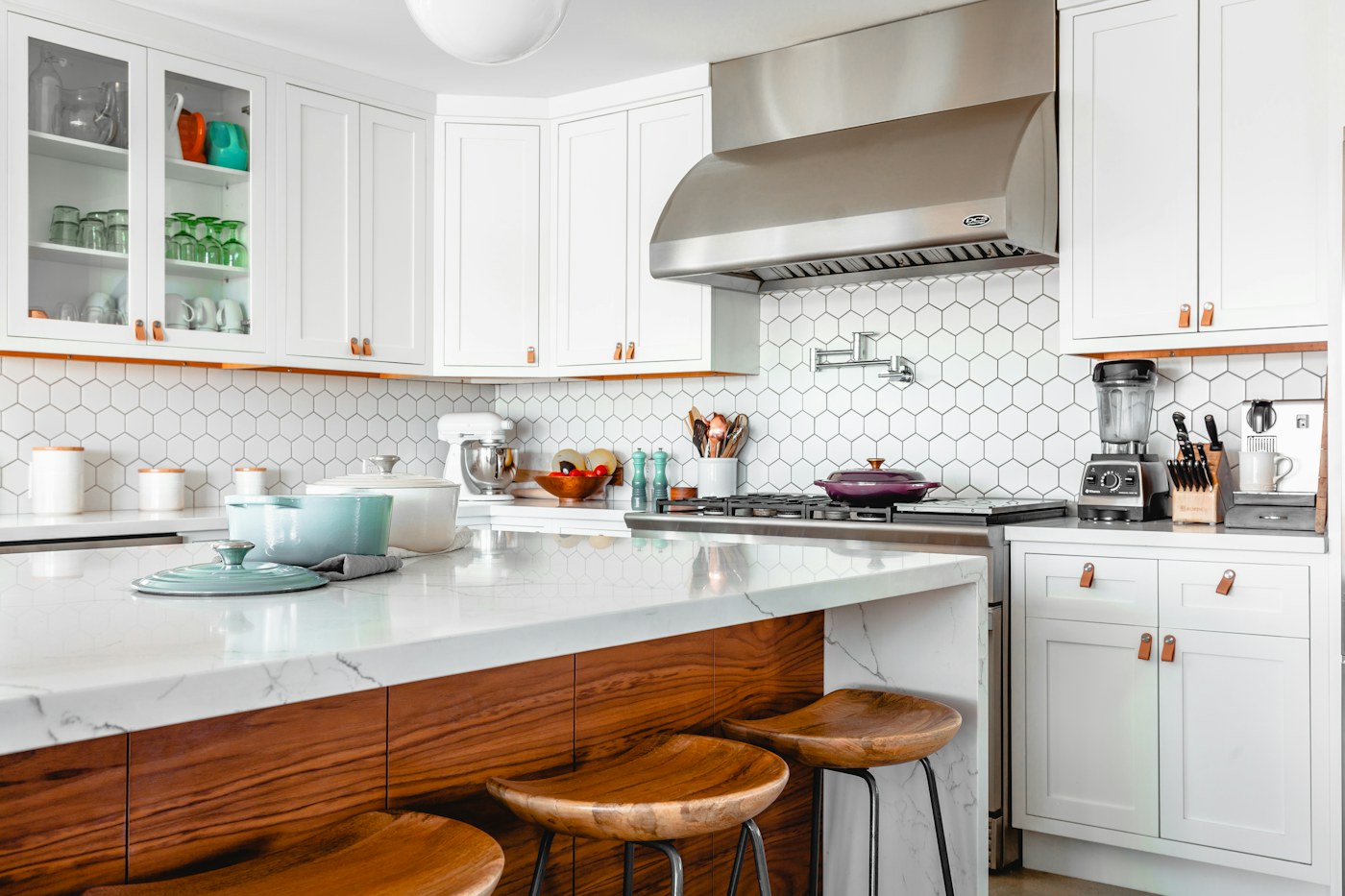
A useful kitchen is built around repeated meals, not an imaginary cook with unlimited cupboards. Someone who prepares soup and sandwiches needs a different arrangement from a household making several dishes each evening. Before adding another utensil, look at the tools used during your last few ordinary meals. These deserve the most accessible space.
Kitchen essentials are also personal to the room. A small rented kitchen may need a clear preparation area more urgently than a matching storage set. A larger family kitchen might benefit from a predictable home for lunch boxes. The right purchase closes a specific gap without making the daily routine more complicated.
Begin with one clear preparation space
Choose the stretch of worktop where you naturally prepare food and remove objects that do not need to live there. Frequently used equipment can remain nearby if the location suits the manufacturer’s directions. Less-used appliances may be stored elsewhere, provided they can be moved safely and the storage is appropriate.
Notice how cupboard and appliance doors open around this space. A tidy-looking arrangement can still force you to walk around an open dishwasher or move a kettle before reaching a chopping board. Work through a simple meal and adjust the layout according to the steps you actually take.
Select versatile preparation tools
A board, a suitable knife, a mixing bowl and utensils relevant to your meals form a more useful starting point than a large packaged collection. Consider cleaning requirements, comfortable handling and storage before choosing each item. Follow the manufacturer’s care guidance, particularly when a material has restrictions around dishwashers, heat or soaking.
Do not duplicate equipment merely because two versions appear in a recipe photograph. A specialist tool may earn its place if you make the relevant dish regularly. If you only use it occasionally, consider whether an existing tool can do the task appropriately. Convenience needs to be weighed against cleaning and the cupboard space it consumes.
Match the essential to your routine
| Household routine | Useful focus | Selection question | Main tradeoff |
|---|---|---|---|
| Quick weekday breakfasts | A clear, compact breakfast zone | Can everything return easily after use? | Permanent countertop storage uses preparation space |
| Batch cooking | Stackable storage suited to the food | Are capacity and care instructions appropriate? | Several sizes can be harder to organise |
| Frequent washing up | Practical tea towels and drying space | Will items dry and be laundered conveniently? | Decorative textiles may require extra care |
| Small shared kitchen | Clearly assigned cupboard areas | Can each person identify their things? | Individual containers can duplicate equipment |
| Occasional hosting | Flexible serving pieces | Will the piece also work on normal days? | Oversized platters need a storage location |
These are decision prompts rather than a compulsory shopping list. A household that seldom hosts does not need to store a large serving collection. A keen baker may reasonably give equipment more room than tableware. Let frequency and access determine the balance.
Treat textiles as working equipment
Tea towels, washable cloths and table linens should suit the jobs you give them. Separate tasks in a way that makes sense for your household, and follow appropriate laundering and care guidance. Choose enough textiles to support your washing routine, rather than the largest available bundle.
Colour can help different cloths remain identifiable, but a colour system is only useful if everyone understands it. Keep clean replacements accessible and designate a sensible place for used items. Avoid turning handles near cooking equipment into an improvised storage rack; arrange textiles according to the equipment’s instructions and the needs of the room.
Mohawk is included as a merchant browsing option for home products. Confirm the actual product range, region, dimensions and intended use before considering a purchase. A decorative home textile should not be assumed suitable for a kitchen task merely because its colour matches.
Store food containers as a complete system
A drawer full of mismatched lids is a familiar source of wasted time. Pair existing containers with their lids before buying more. Retire damaged or unsuitable items in accordance with the material and local disposal guidance. Check the manufacturer’s information for food contact, storage, heating and cleaning uses rather than inferring suitability from appearance.
Choose sizes that correspond to the portions you normally store. A collection of huge containers may use space inefficiently for small leftovers. Nested containers can save room, but only if pulling out one does not require unloading the whole cupboard. Keep lids in a way that is easy to maintain on a busy evening.
Make attractive things earn their place
A jug can hold flowers between uses, and a simple bowl can serve more than one kind of meal. Such flexibility makes decorative choices easier to justify, but it should not blur intended use. Confirm that an item is suitable for food before using it to serve. A handsome vessel sold as decoration is not automatically tableware.
If you enjoy an open shelf, display a small number of regularly used pieces and allow for the cleaning it requires. Closed cupboards may be more practical in a busy kitchen. The point is to make the room pleasant for its users, not to maintain a shelf arrangement that interrupts cooking.
Purchase the missing piece last
After reorganising, keep a note of tasks that remain awkward for several meals. That pattern identifies a real gap. Measure the intended storage position, read the care information and review returns before ordering. Check whether a replacement must work with existing pieces, such as a lid or appliance accessory.
The same measured approach helps with adjacent spaces. Use the entryway organisation guide if bags and incoming shopping are spilling into the kitchen, and explore home and living for other practical room projects.
Frequently asked questions
Are matching sets worthwhile?
They can simplify storage when every piece is useful. Compare the contents with your meals and cupboard dimensions. An individual replacement may be better than a set containing several items you would rarely reach for.
How much should stay on the worktop?
Keep what supports frequent tasks and fits the available space. There is no universal number. Test whether you can prepare a normal meal without moving a row of unrelated objects first.
What is a good kitchen gift?
Choose around a known routine, available space and care preferences. Ask before buying specialist equipment. A recipient’s favourite style of cooking is a stronger clue than the size or apparent sophistication of a gadget.