
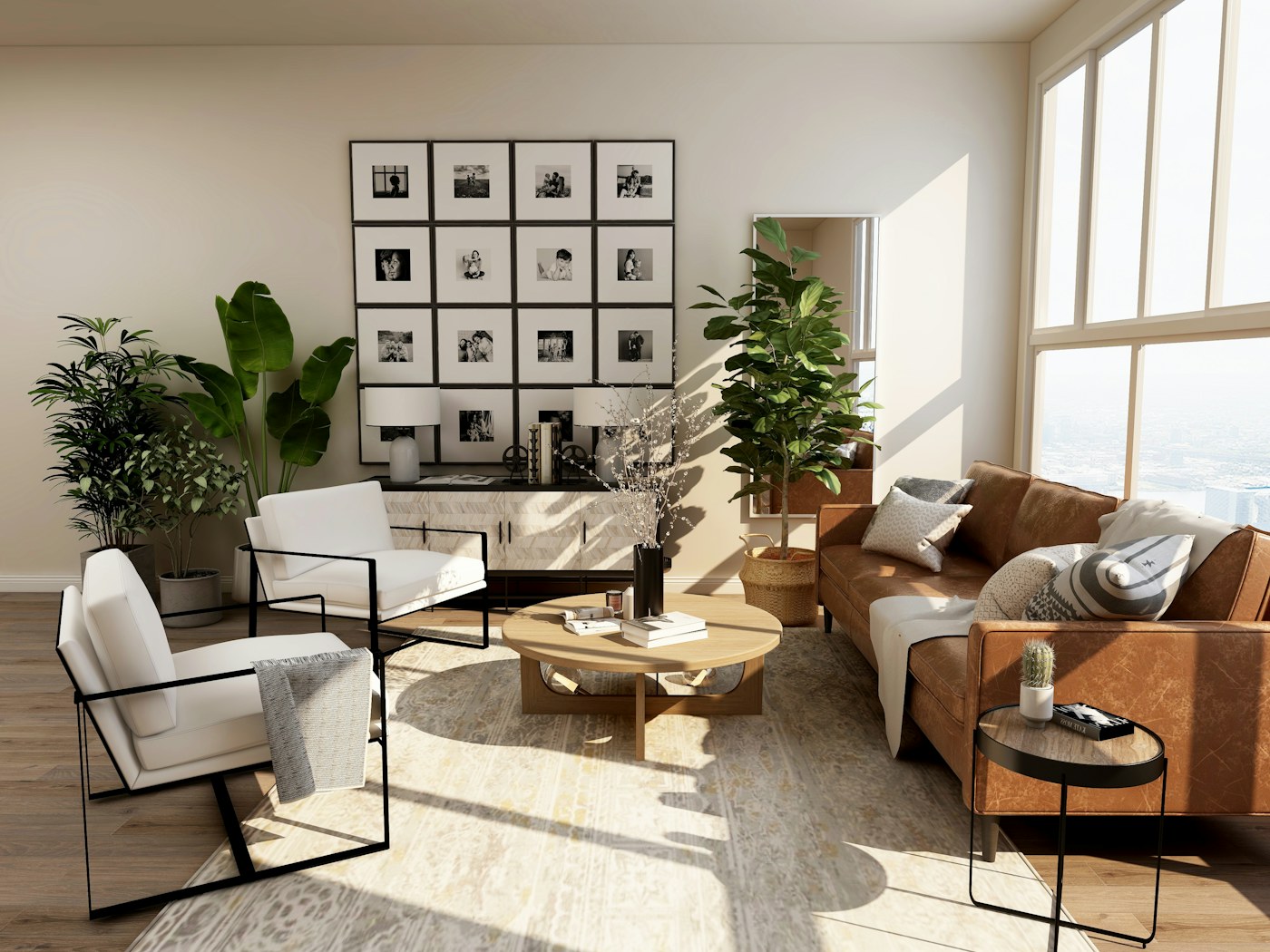
A collected living room rarely comes from buying everything at once. It develops when furniture, textiles and small objects support the way a household spends time. The useful starting point is therefore a normal evening: where people sit, where a drink goes, which lamp gets switched on and where the unfinished book lands. Those details reveal more than a photograph of an empty room.
Before adding anything, move the objects that routinely cause friction. A chair that blocks a doorway, a coffee table just beyond comfortable reach or a basket that nobody uses may be creating the feeling that the whole room needs replacing. Give the arrangement a few evenings before deciding what is missing.
Choose the room’s main job
A living room can accommodate conversation, television, reading and occasional work, but one activity usually determines its layout. For conversation, angle seats towards each other rather than lining every piece against a wall. For television, consider the normal viewing position before placing a decorative chair. A reading corner needs a place for a book and a light within reach, not simply an attractive armchair.
In a shared flat, a small side table can be more useful than a larger central table because each person has somewhere for their belongings. In a family room, preserving clear floor space may matter more than fitting another occasional seat. Draw the furniture as simple rectangles and mark door swings before moving heavy pieces.
Build a restrained material palette
Warmth does not require an entirely beige room. Begin with two existing materials you like: perhaps a timber cabinet and a blue sofa. Repeat their qualities through smaller additions instead of matching every colour exactly. A woven cushion can echo the cabinet’s texture, while a print with a little blue connects the sofa to another part of the room.
Use one softer surface, one firmer surface and one personal element as a practical balance. Upholstery and curtains bring softness; timber, metal or ceramic gives definition; a framed photograph or inherited object makes the space specific to its owners. If every surface is plush, the room can feel visually heavy. If everything is smooth and hard, it may lack the relaxed quality you want.
Decide which addition earns its space
| What feels wrong | First adjustment | Possible addition | Tradeoff to consider |
|---|---|---|---|
| Seats seem disconnected | Bring furniture closer | A suitably sized rug | More floor coverage means more cleaning |
| Evenings feel stark | Change which lights are used | A shaded table lamp | Needs a practical cable route |
| Small objects spread everywhere | Give each object a home | A tray or closed basket | Storage must suit what actually accumulates |
| The room looks flat | Repeat an existing colour | A textured cushion cover | Extra cushions reduce usable seating |
| There is nowhere to put a drink | Move an existing table | A compact side table | Check circulation space first |
A rug should suit both the furniture grouping and the floor beneath it. Mark the proposed outline with removable tape and view it from the doorway. A small rug can read as a separate island rather than linking the seating. A larger one may interfere with doors or reach awkwardly into a circulation route. Check the item’s dimensions, care guidance and suitability for your floor before ordering.
Layer lighting around activities
An overhead light is useful for cleaning and finding things, while a lamp beside a seat can make evening activities more comfortable. Work from actual positions: a beautiful lamp on an inaccessible console will not necessarily improve a reading corner. Check that the switch can be reached without leaning behind furniture.
Place cords where they will not cross walking routes, and follow the lamp manufacturer’s directions. Choose bulbs according to the fitting’s specified requirements. If you rent, a freestanding lamp can offer flexibility without changing permanent fittings. Where fixed electrical work is needed, use an appropriately qualified professional rather than treating it as a styling task.
Give meaningful objects room to breathe
A shelf does not need to display everything you own simultaneously. Group objects that relate through shape, material or personal meaning, then leave a useful amount of empty space. Books can remain accessible instead of becoming a base for unstable towers of accessories. Keep frequently used objects at an easy height.
Try a simple edit before purchasing decorative pieces: remove a third of what is on display, live with the result and bring back only what you miss. Store the rest carefully for a later rotation. This creates a genuinely collected effect because the arrangement reflects selection, rather than a requirement to fill every gap.
Buy in a sensible order
If the layout works, prioritise the addition that resolves a daily inconvenience. A reachable table generally earns its place sooner than another ornament. After that, consider floor textiles, lighting and cushion covers in relation to what you already have. Mohawk is included as a merchant browsing option alongside this guide; verify the exact range, regional availability and product details independently before choosing anything.
Keep a note of dimensions and photographs of existing materials on your phone. Check delivery arrangements, returns and care instructions, particularly for a large rug. A discounted item is still a poor fit if it creates a new problem. For a smaller adjoining area, the entryway organisation guide applies the same principle of solving the routine before adding storage.
Frequently asked questions
Can different wood tones work together?
Yes, provided the combination feels intentional to you. Repeating a tone elsewhere can help, but exact matching is unnecessary. Compare the pieces in the room’s actual light before adding another finish.
How many cushions does a sofa need?
There is no required number. Start with the number that leaves everyone comfortable and does not require a pile on the floor whenever someone sits down. Covers offer an easier seasonal change than extra filled cushions.
What should a limited budget cover first?
Address the inconvenience you notice most often. That may mean rearranging furniture at no cost. Browse more home and living guides only after identifying the specific gap, so useful ideas do not become an unplanned shopping list.